“He took an ordinary article of life, and placed it so that its useful significance disappeared under the new title and point of view – created a new thought for that object.”
"The Richard Mutt Case" May 1917 issue of The Blind Man magazine
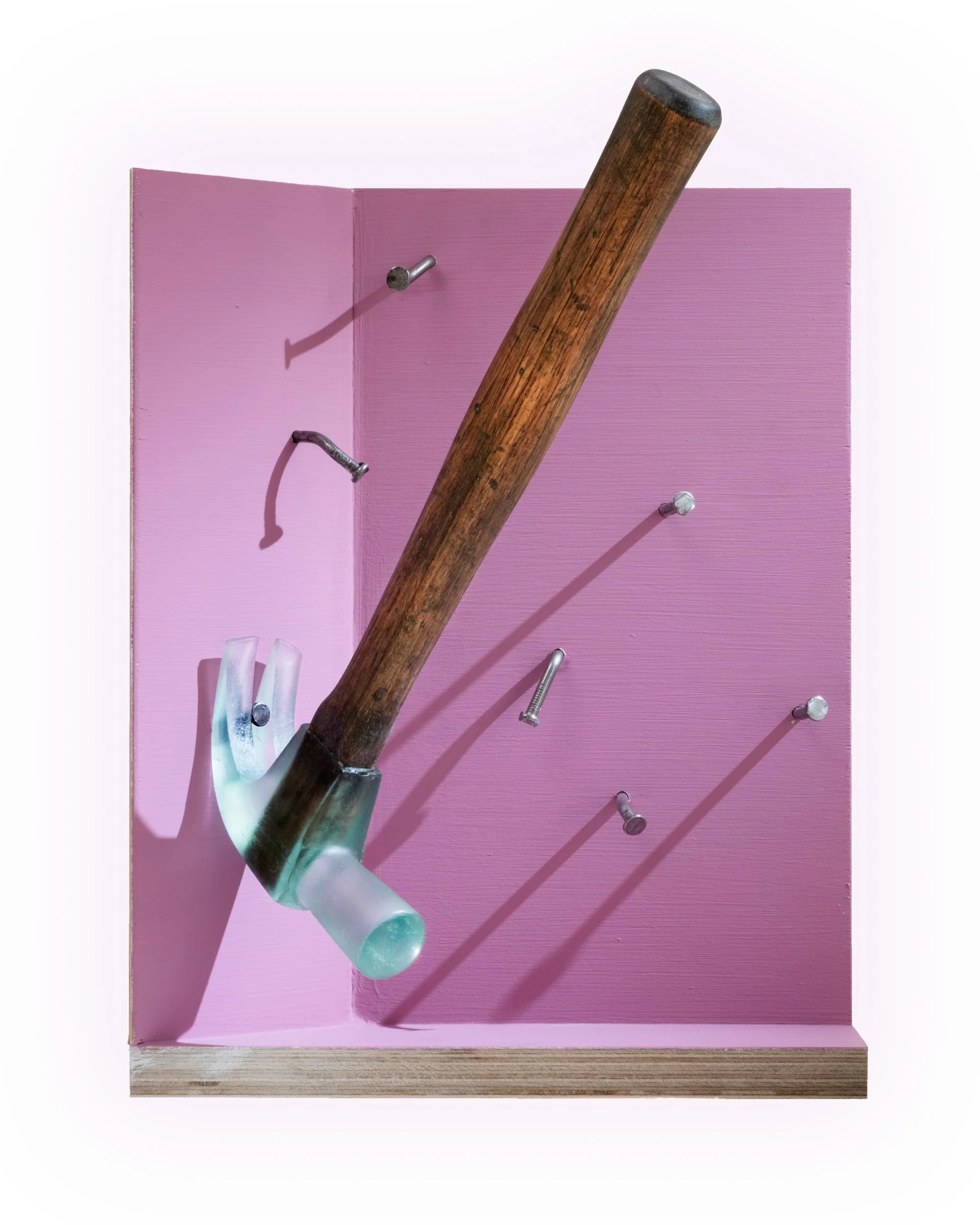
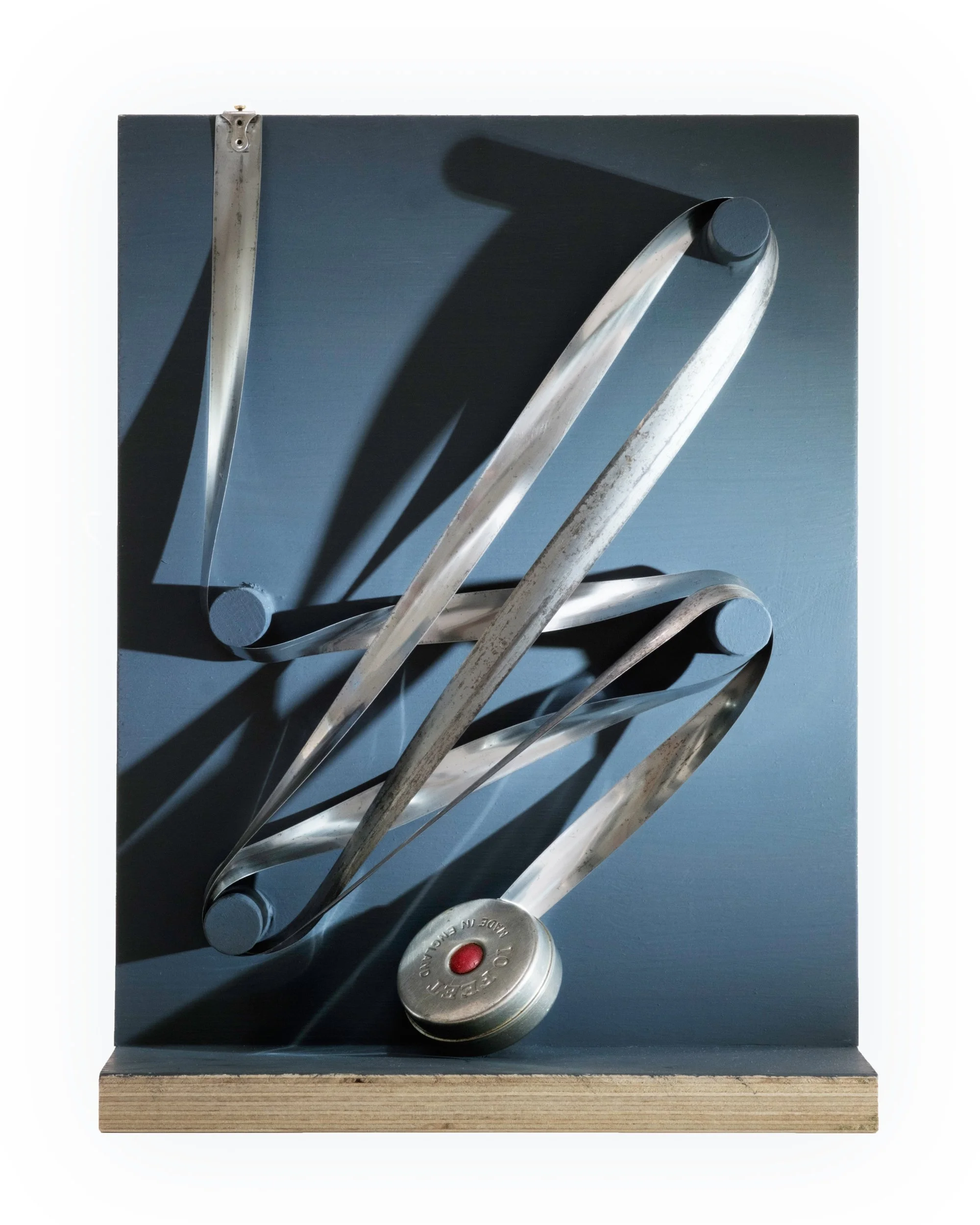
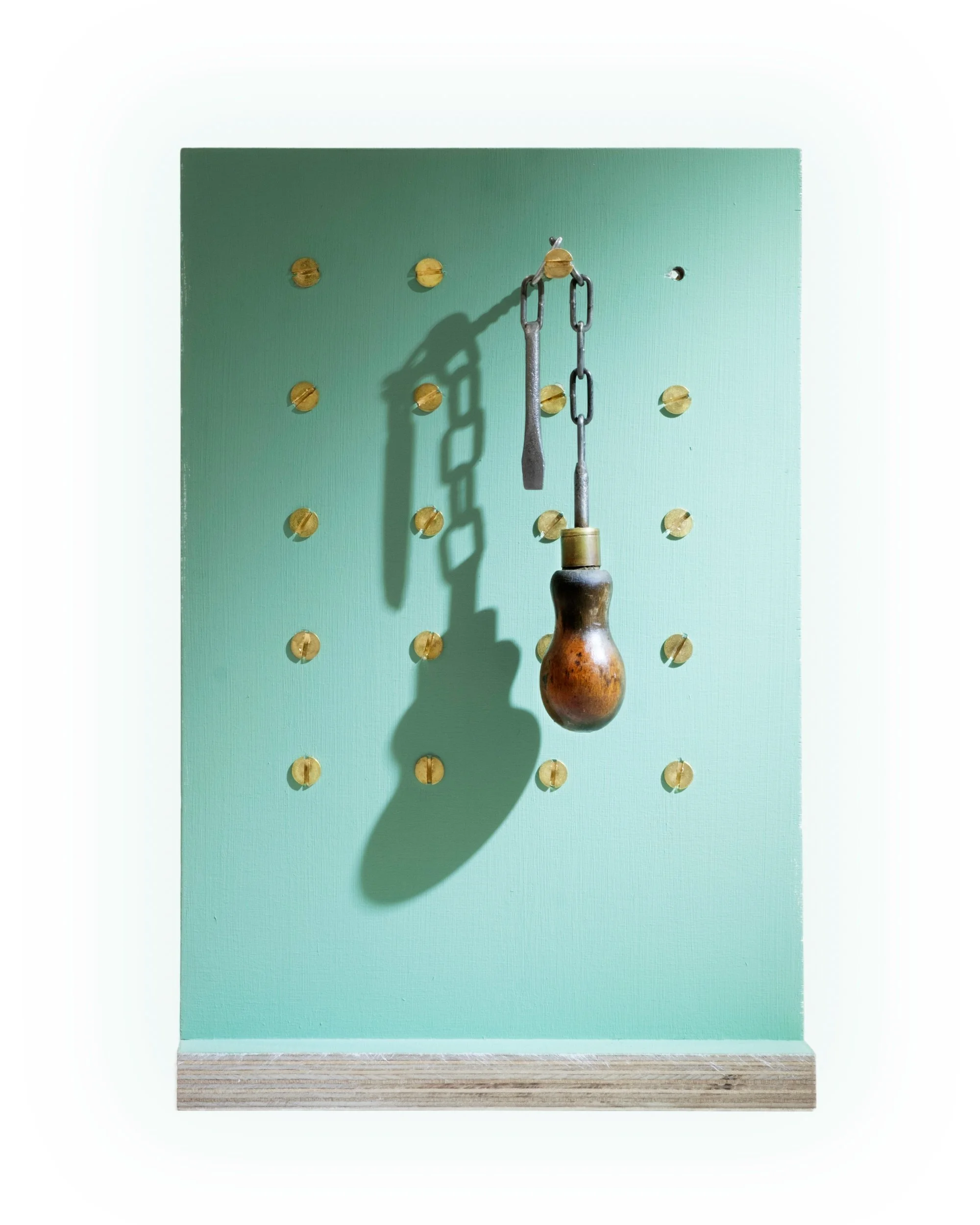
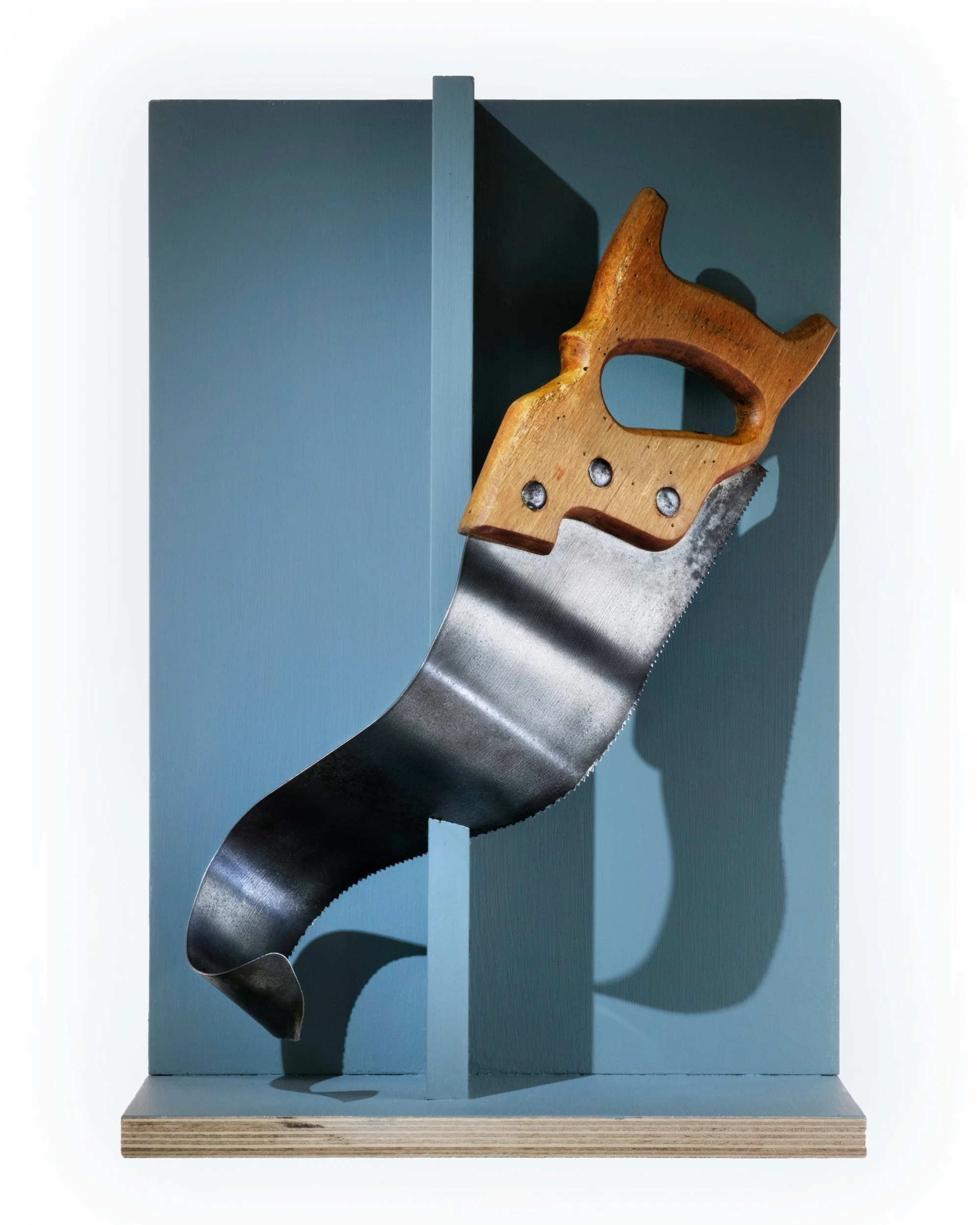
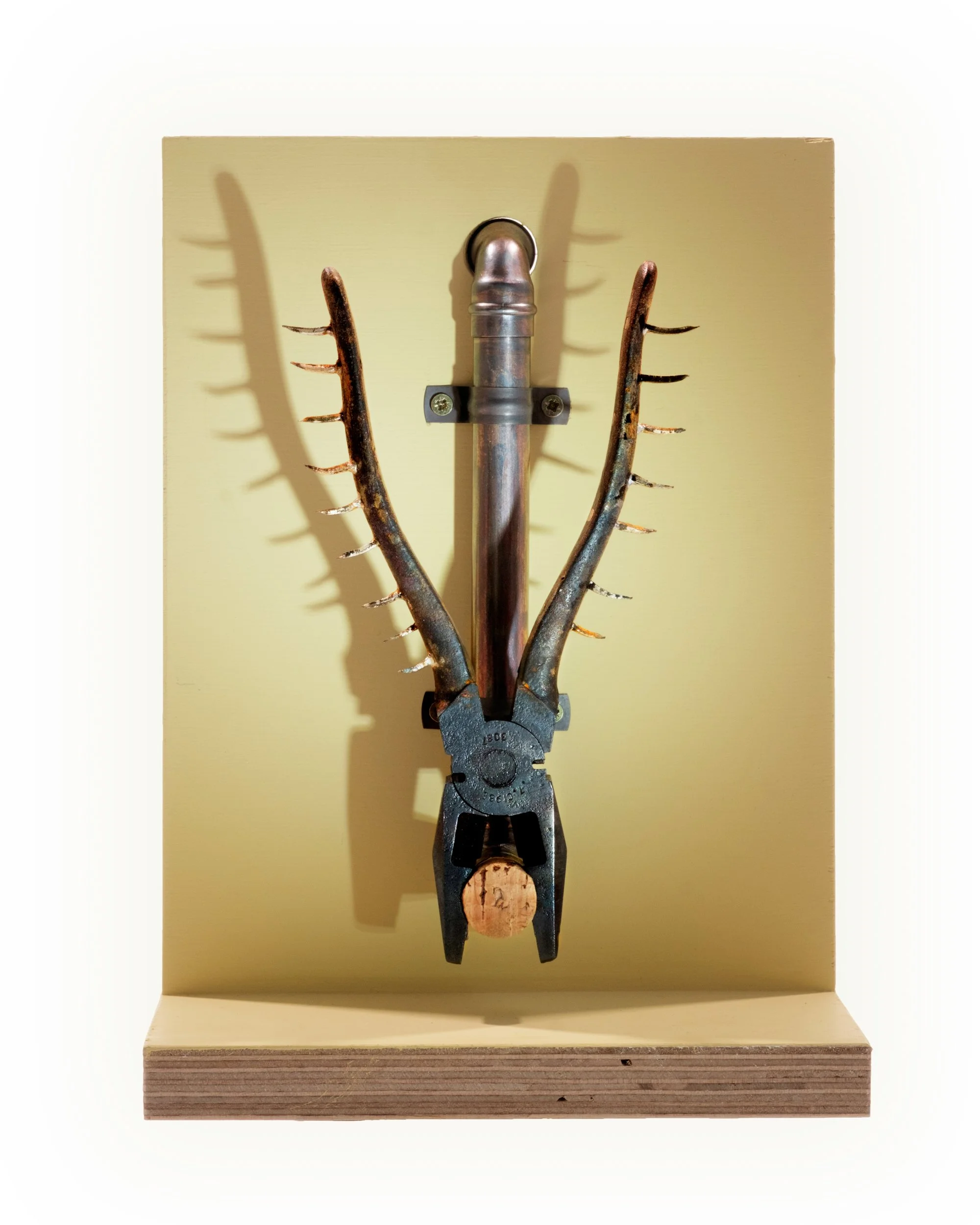
This series started with a thought about old tools - rusted and melancholy in a junk shop pile. They were made for doing things but now those things were done and even if they could still work they probably never would again. What is a tool if it isn’t used? If it no longer functions as a doing thing what kind of thing is it? Is a thing defined by what it is or what it does? What about a person?
Finding a sense of value and identity in what you do is not unique to men but entrenched attitudes to masculinity can make it difficult for men to recognise other sources of self worth. The age-old message to men has been that their worth is not innate, not a part of their self but contained in their ability to perform certain roles or functions. The anthropologist David Gilmore identified just three roles, Provider, Protector and Progenitor as near universal identifiers of masculinity across cultures. To reduce being a man to these three tasks not only creates a very narrow definition of success, it creates a very wide possibility for existential failure, tied directly to whether on not you function in your roles.
Made in the early 20th century Marcel Duchamp’s “readymades” sculptures, including the infamous urinal (Fountain, 1917), sought to remove everyday objects from their function and, thus liberated from usefulness, to elevate the thing to art. The separation of the form from its function allowed it to become something greater, something that invited a new kind of thought, about the thing itself and about other things like life, death, love and more. In a sense, the objects Duchamp chose to transfigure through his intervention could be said to be repurposed, rather than made useless.
Duchamp’s objects were “dysfunctional” as far as their original identities was concerned but perhaps, like The Levellers, the hippies or the punks, they were opting out of the role defined for them, they refused to be good little workers in the capitalist machine, they embraced a counter-culture. Their dysfunction was a rebellion against the system.
As I get older and feel the encroaching deterioration of mind and body I would like to be able to see these changes as a “liberation from usefulness”, a rebellion or perhaps an elevation to the status of an artwork, but I do not. Instead, each thing I can no longer do seems to threaten to my sense of worth.
This series is a challenge to that sense of threat.
Dysfunctions presents five ways that age and illness can stop us fulfilling the roles that may define us - Fragility, Uncertainty, Impotence, Deformity and Pain. Each dysfunction is represented by a sculpture of old tools in the mold of Duchamp’s readymades - objects made greater, rather than lesser than by their uselessness. These images do not look away from the reality of getting old or becoming unwell, instead they offer space for new thoughts about those changes.
I would like to give a different purpose to the old tools, one that disconnects worth from function and allows them to be more than just doing things. I want this for the tools so that I can imagine a future for myself where I can no longer do, but I am still happy to be.